Mortgage guides & explainers
Plain-English explainers on how mortgages actually work across the UK, US, Canada and Australia — the rules, the maths, and the numbers behind the calculators.

FHSA Contribution Room and What Delay Costs in 2026
FHSA room starts only when you open the account. Why the deadline to open is five calendar years before you buy, and what opening later costs to the dollar.
Read more →
Self-Employed Home Loans in Australia: What Counts as Income
Lenders assess your assessable income, not your taxable income. What add-backs are worth, why the two-year rule is softening, and what alt-doc costs in deposit.
Read more →
Guarantor Mortgages UK: Liability, JBSP and Stamp Duty
A guarantor pays only after a missed payment. A joint borrower is liable from day one. And who goes on the deeds can cost £20,000 in stamp duty.
Read more →
What an EPC and Gas Safety Certificate Cost in 2026
An EPC runs £45 to £120, a gas safety record £60 to £150, an EICR £100 to £350. Annualised, the certificate everyone searches for is the cheapest.
Read more →
Using KiwiSaver for a First Home Deposit in 2026
You can withdraw all but $1,000 after three years in KiwiSaver. What that gives you, why the First Home Grant no longer exists, and the 5% deposit route.
Read more →
How Much Is CMHC Insurance? Cost by Down Payment
CMHC premiums run 0.60% to 4.00% of the mortgage. What each down payment costs, and why capitalising it costs 1.67 times the premium.
Read more →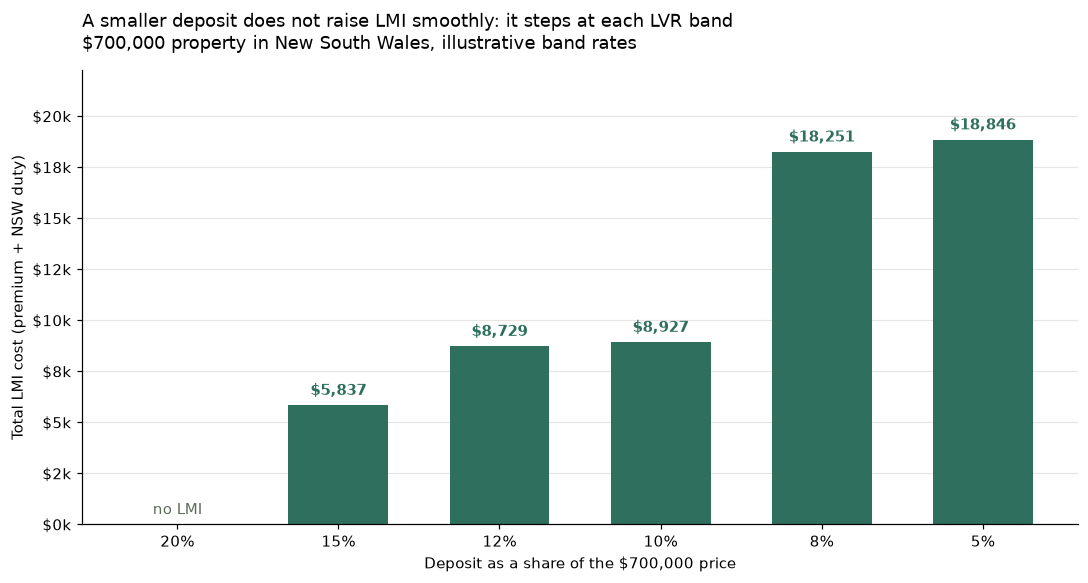
How Much Is LMI in Australia? Cost by Deposit Size
LMI applies above 80% LVR. What it costs at a 15%, 10% and 5% deposit, and why crossing 90% costs 2.6 times the extra you borrow.
Read more →
Why a Lower Mortgage Rate Can Still Cost You $118,000
Refinance $200,000 at 6% and the payment drops $543 a month, but a fresh 30-year term adds $118,078. Keep the term and the same cut saves you.
Read more →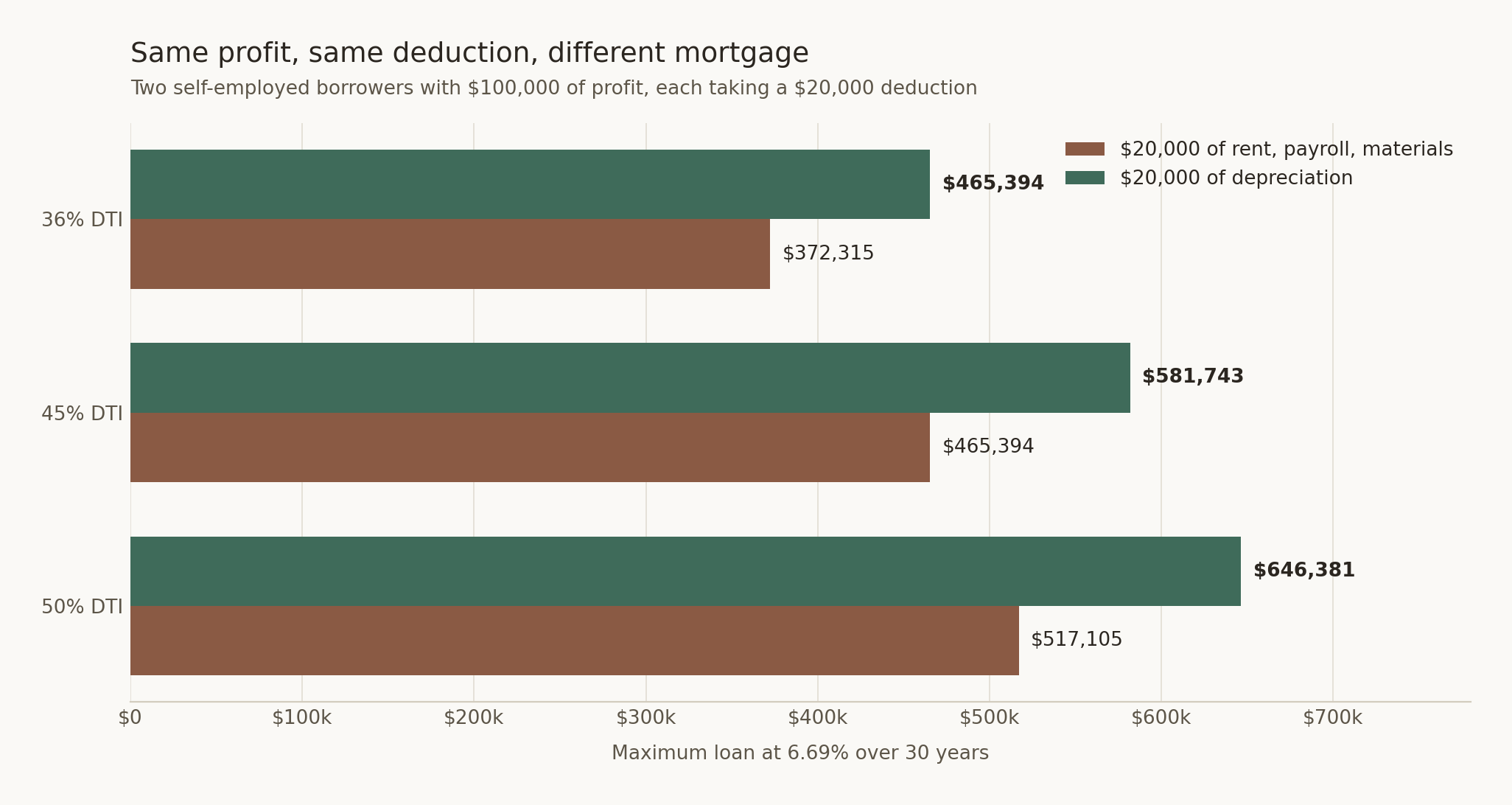
Self-Employed? How Mortgage Lenders Read Your Income
Lenders use taxable net income, not revenue. Which deductions come back, why averaging never favours you, and the $93,000 difference.
Read more →
Family Guarantee Home Loans: What Your Parent Really Risks
A limited guarantee caps a parent's liability at the slice above 80% LVR. See that figure beside the LMI it saves, and why it is roughly three times larger.
Read more →
NZ Mortgage Break Fees: How Banks Calculate What You Owe
Break fees track wholesale swap rates, not the rate you were paying. What that means, when the fee is zero, and the term mistake that overstates it 30-fold.
Read more →
Ontario Land Transfer Tax: Why Toronto Costs Twice as Much
Ontario land transfer tax rates, and why crossing into Toronto doubles the bill. On an $800,000 home that boundary is worth $12,475 in cash at closing.
Read more →
Borrowing Power in Australia After the RBA's August Hold
The RBA held at 4.35% on 11 August. Your bank still tests you at your rate plus three points, and that buffer decides the loan, not the cash rate.
Read more →
What Income Do You Need for a $300,000 Mortgage Loan?
A $300,000 mortgage costs $1,933.84 a month at 6.69%. The income qualifying at Fannie Mae's 36%, 45% and 50% ceilings, and why $600,000 doubles.
Read more →
Stamp Duty Bands Explained: What Each Slice Really Costs
The UK stamp duty bands from 1 April 2025, what each one costs on a real price, and why first-time buyer relief ends as a £5,000 cliff at £500,000.
Read more →
Inflation Cooled to 3.4%. Why Is Your Rate Still 6.67%?
July inflation eased to 3.4%, but the 30-year rate held at 6.67% and is forecast near 6.5%. What the gap costs your buying power, and the rate to plan around.
Read more →
The $22,000 Gap: America Has Two Housing Markets, Not One
Redfin says you need $109,796 for the typical US home. It also said you need $70,693 for a starter home. The median household clears one and misses the other.
Read more →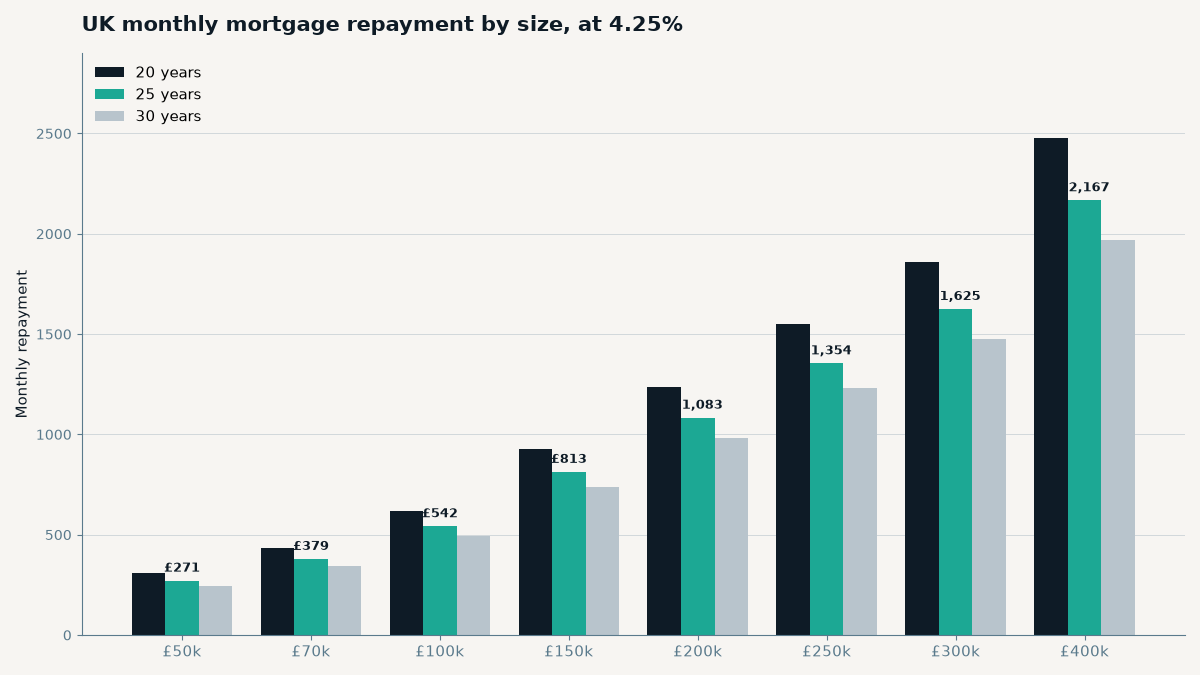
Monthly Cost of a £70,000, £150,000 or £250,000 Mortgage
Monthly repayments for every common UK mortgage size from £40,000 to £500,000, at 20, 25 and 30 years, with the income and deposit each one needs.
Read more →
Does the Fed Set Mortgage Rates? What the Hold Really Means
The Fed held rates at 3.50-3.75% on 29 July in a 9-3 vote. Mortgage rates track the 10-year Treasury instead, which rose the same day. Here is the maths.
Read more →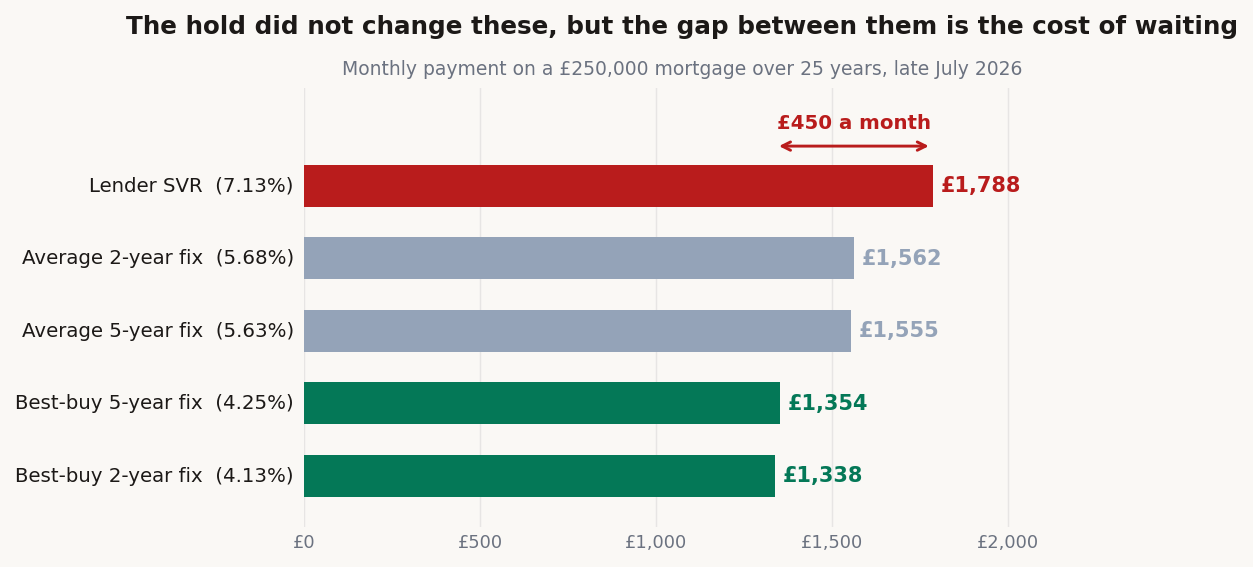
Bank of England Holds at 3.75%: What It Means for Mortgages
The Bank of England held Bank Rate at 3.75% on 30 July in a 6-3 vote. What it changes for tracker, SVR and fixed borrowers, and what waiting costs.
Read more →
How Much Mortgage Can You Get on Your Salary? UK Guide
UK lenders start at about 4.5 times salary. See what you could borrow on a £30,000 to £100,000 salary, what it costs monthly, and what shrinks the figure.
Read more →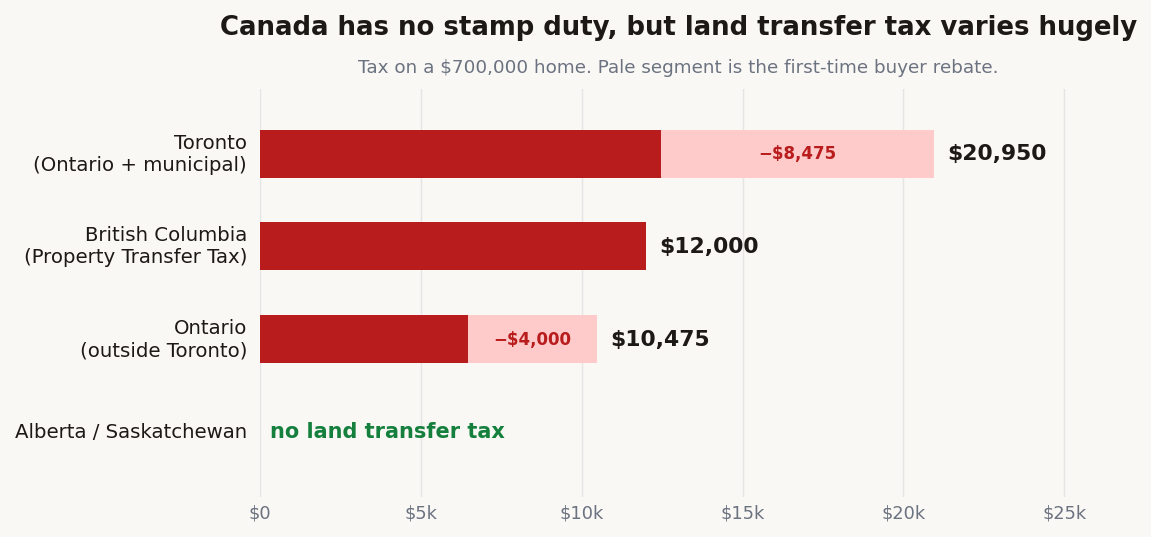
Does Canada Have Stamp Duty? Land Transfer Tax Explained
Canada has no stamp duty, but most provinces charge land transfer tax. See what a $700,000 home costs in Ontario, Toronto, BC, and Alberta, and the rebates.
Read more →
Interest-Only Mortgage Payments: How They Are Calculated
An interest-only payment is the balance times the rate over twelve. What £250,000 costs at each rate, the rules, and retirement interest-only.
Read more →
How Is PMI Calculated? Cost, Rates, and When It Ends
PMI is an annual percentage of your loan, usually 0.3% to 1.5%. See how it is calculated on a $400,000 home, what drives the rate, and when it must end.
Read more →
Overpay Mortgage Monthly or Lump Sum? What Saves More
Overpaying monthly or as a lump sum barely differs. See what each saves on a £250,000 UK mortgage, and the overpayment choice that matters far more.
Read more →
Extra Principal Payments: What $100 a Month Really Saves
Extra principal payments shorten your mortgage, not your monthly bill. See what $100, $200, or one extra payment a year saves on a $400,000 US loan.
Read more →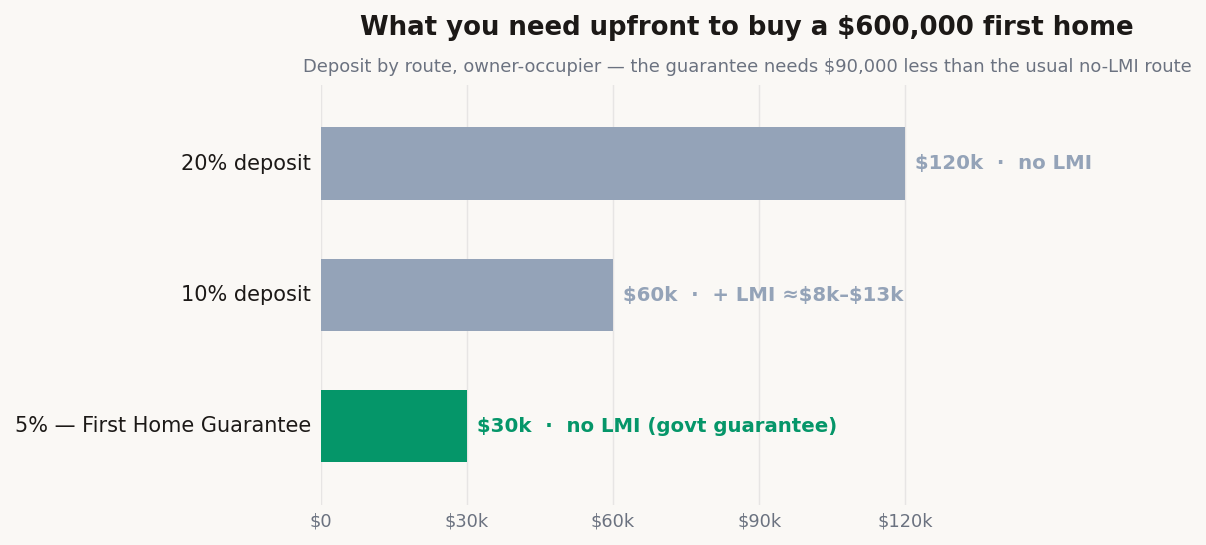
First Home Buyer in Australia: Deposit, LMI and Grants
Australia's First Home Guarantee lets you buy with a 5% deposit and no LMI. See what that saves on a $600,000 home versus the usual deposit and LMI routes.
Read more →
Second-Home Stamp Duty: The 5% UK Surcharge Explained
Second homes and buy-to-lets in England pay a 5% stamp duty surcharge on the whole price. What it adds on £300,000, and when you can reclaim it.
Read more →
Canada Mortgage Renewal 2026: How Big Is the Jump?
Over a million Canadians renew mortgages in 2026, many off ~2% pandemic rates. See the monthly payment jump on a $500,000 mortgage renewing near 4.5%.
Read more →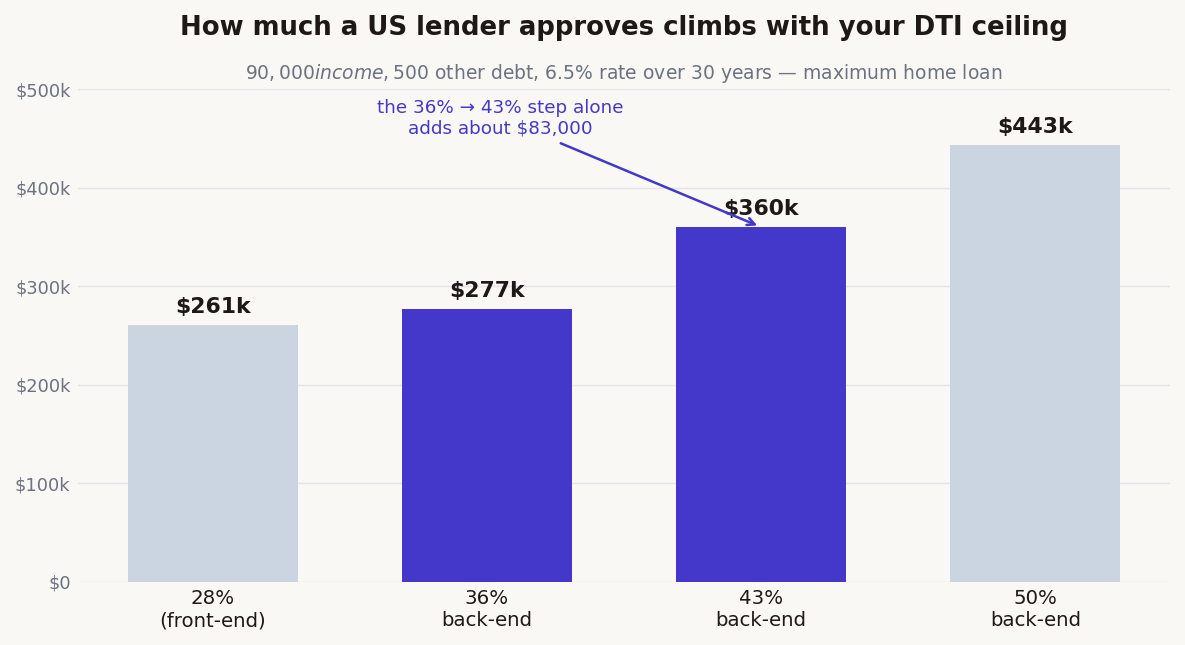
Debt-to-Income Ratio: How Much US Lenders Let You Borrow
US lenders size your mortgage with debt-to-income ratios. See how much you can borrow at a 36% vs 43% DTI on a $90,000 income, and how it stretches to 50%.
Read more →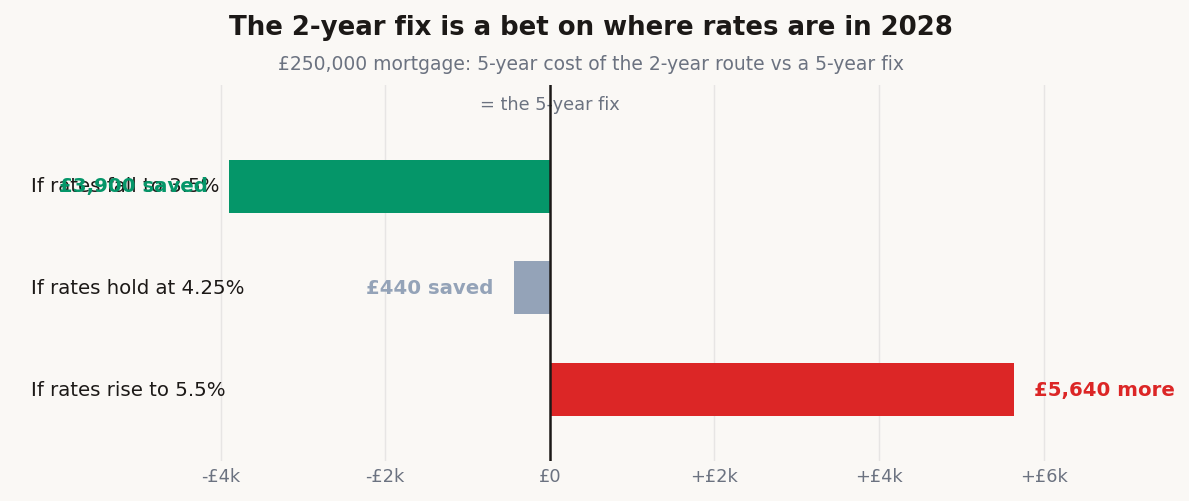
2-Year vs 5-Year Fix: Which UK Mortgage Deal Wins in 2026?
With 1.8 million UK fixed deals ending in 2026, is a 2-year or 5-year fix better? See the cost of each on a £250,000 mortgage, and when each one wins.
Read more →
How Much Can You Borrow for a Mortgage in New Zealand?
Three rules cap a New Zealand mortgage: the RBNZ 6x-income DTI limit, your deposit (LVR), and the bank's test-rate check. The lowest one wins.
Read more →
UK Mortgage Term Length: What 25 to 40 Years Really Costs
A longer UK mortgage term cuts your monthly payment but adds tens of thousands in interest. See what 25, 30, 35, and 40 years cost on a £250,000 loan.
Read more →
UK Affordability Eased: How Much More Can You Borrow?
UK lenders eased affordability tests in 2026 and regulators are relaxing the high loan-to-income cap. How much more you can borrow, and how to check your limit.
Read more →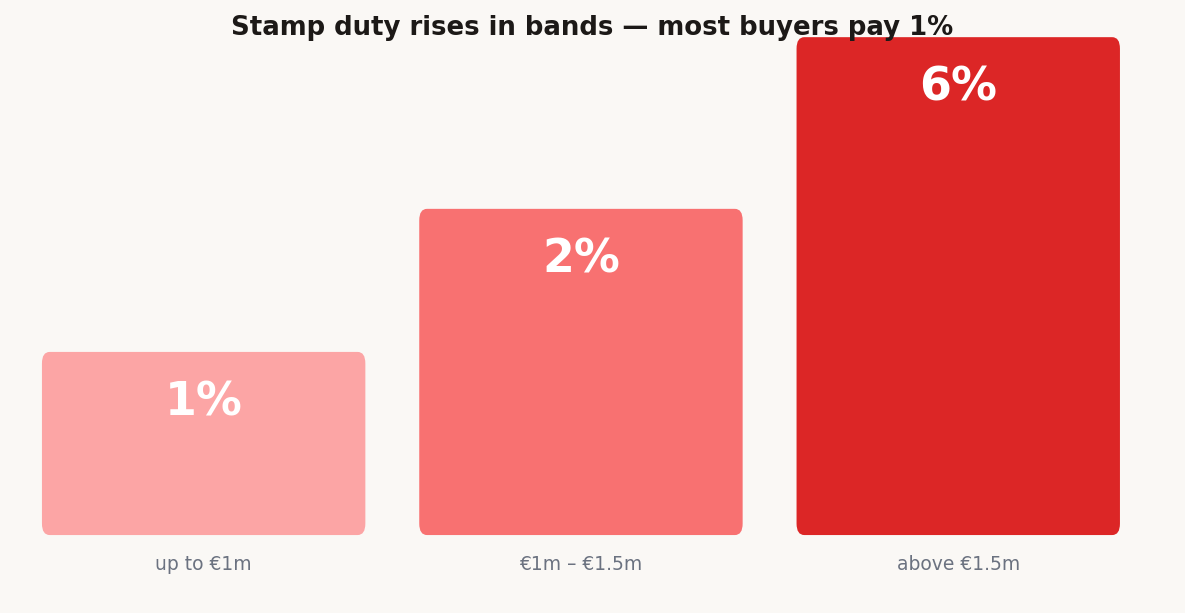
Irish Stamp Duty on a Home: Rates and What Buyers Pay
Irish residential stamp duty is 1% up to €1 million, 2% to €1.5 million, and 6% above. Most buyers pay 1%, and there is no first-time-buyer break.
Read more →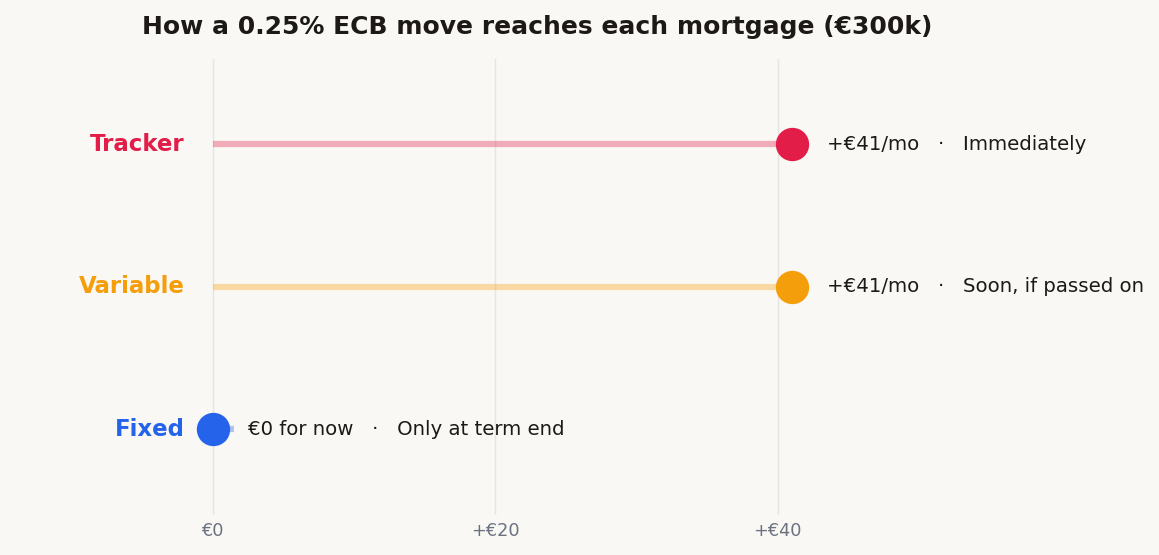
What an ECB Rate Change Does to Your Irish Mortgage
An ECB rate move hits a tracker at once, a variable rate soon after, and a fixed rate not until it ends. What a 0.25% change costs on an Irish mortgage.
Read more →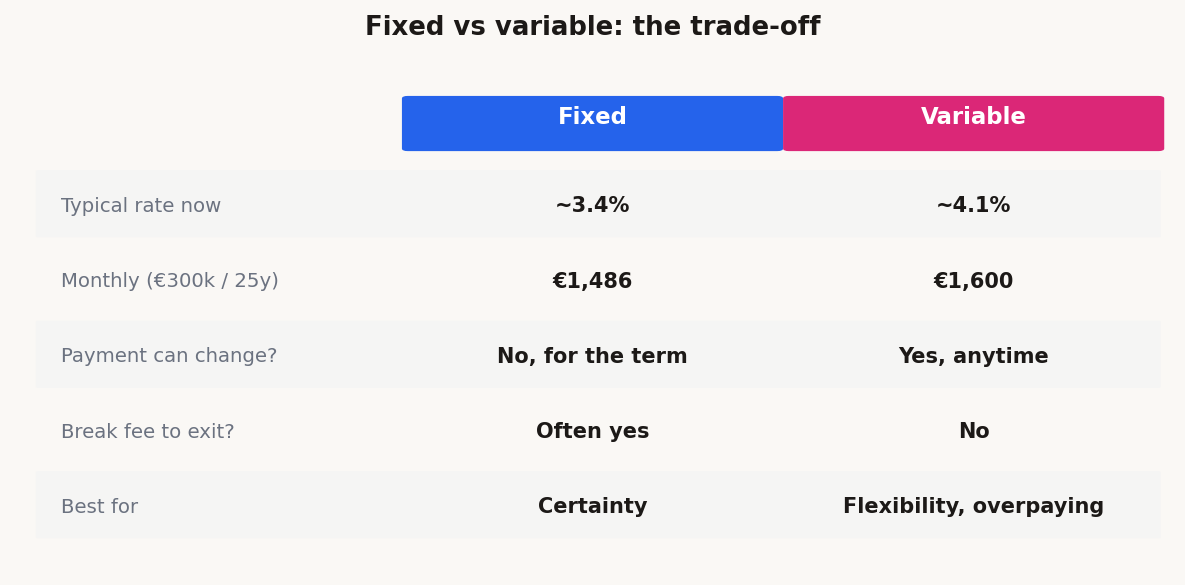
Fixed, Variable, or Tracker: Choosing an Irish Mortgage Rate
In Ireland, new buyers really choose between fixed and variable; trackers are closed to new customers. How each rate type behaves, and what it costs.
Read more →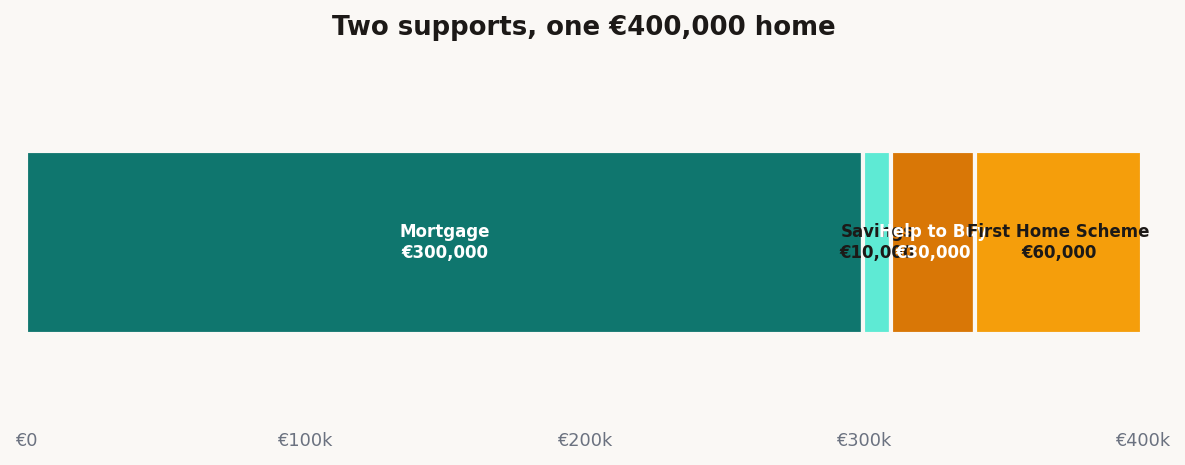
Help to Buy vs First Home Scheme: How They Work Together
Ireland's two first-time-buyer supports do different jobs: Help to Buy refunds your tax toward the deposit, the First Home Scheme takes an equity share.
Read more →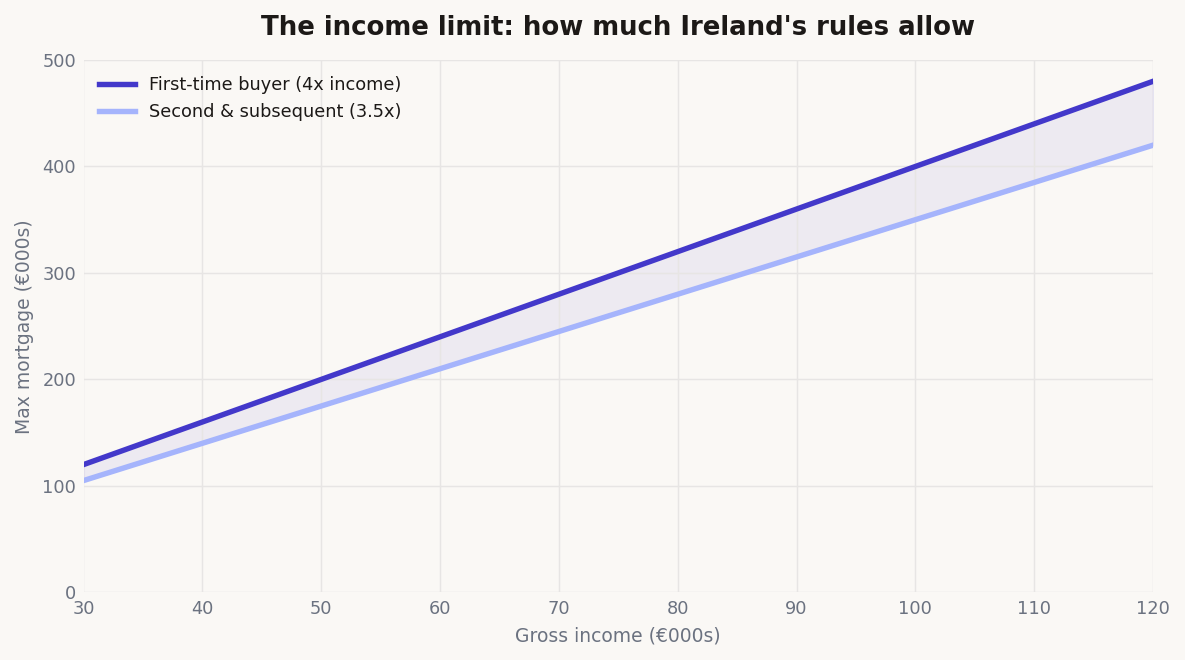
Ireland's Central Bank Mortgage Rules: How Much You Can Borrow
The two Central Bank rules that cap an Irish mortgage: four times income for first-time buyers, 3.5 times after, and a 10% minimum deposit. What each means.
Read more →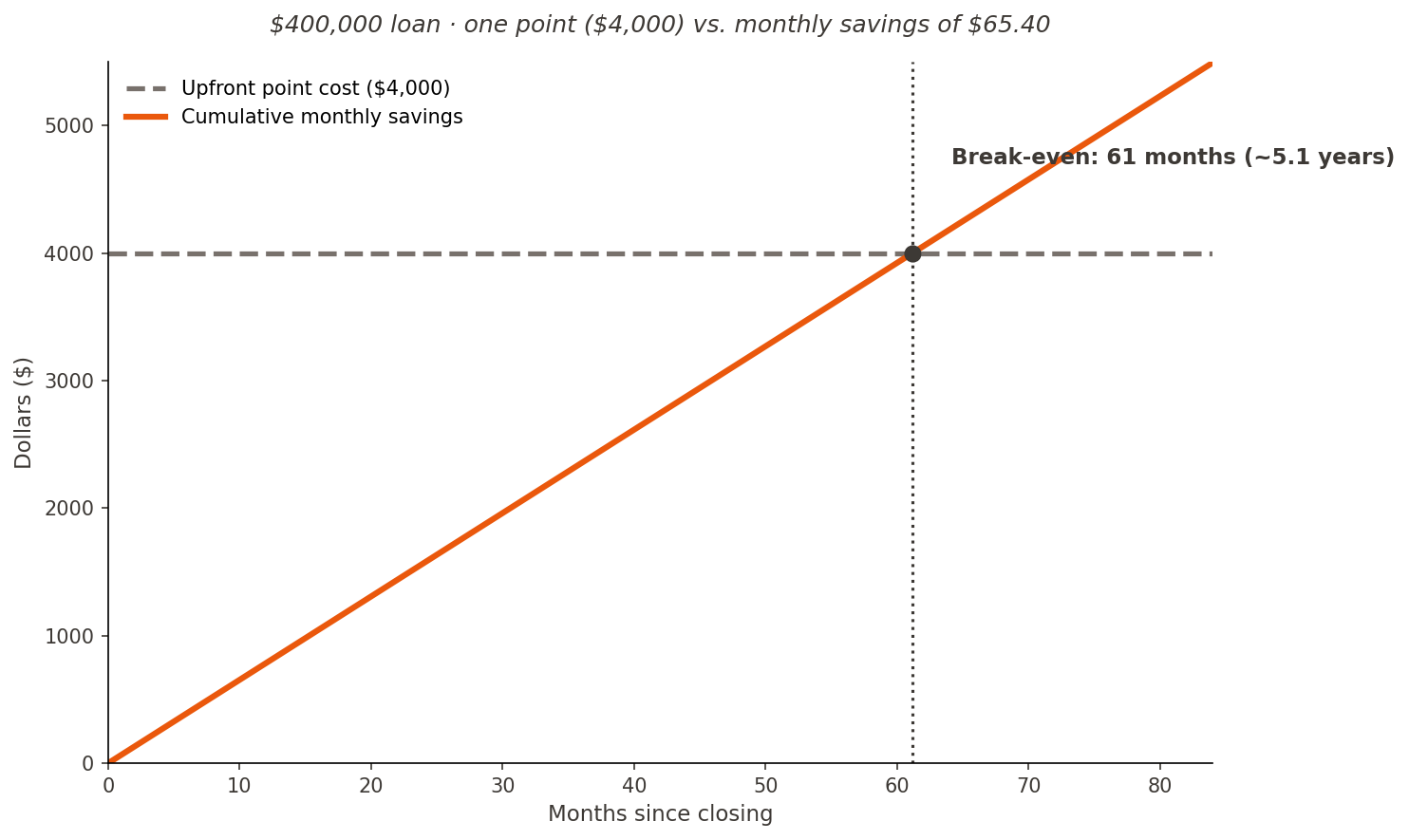
Mortgage Points: Break-Even Math on Buying Down Your Rate
Buying mortgage points lowers your rate, but not for free. Here's the break-even number on a $400,000 loan, and when paying points actually pays off.
Read more →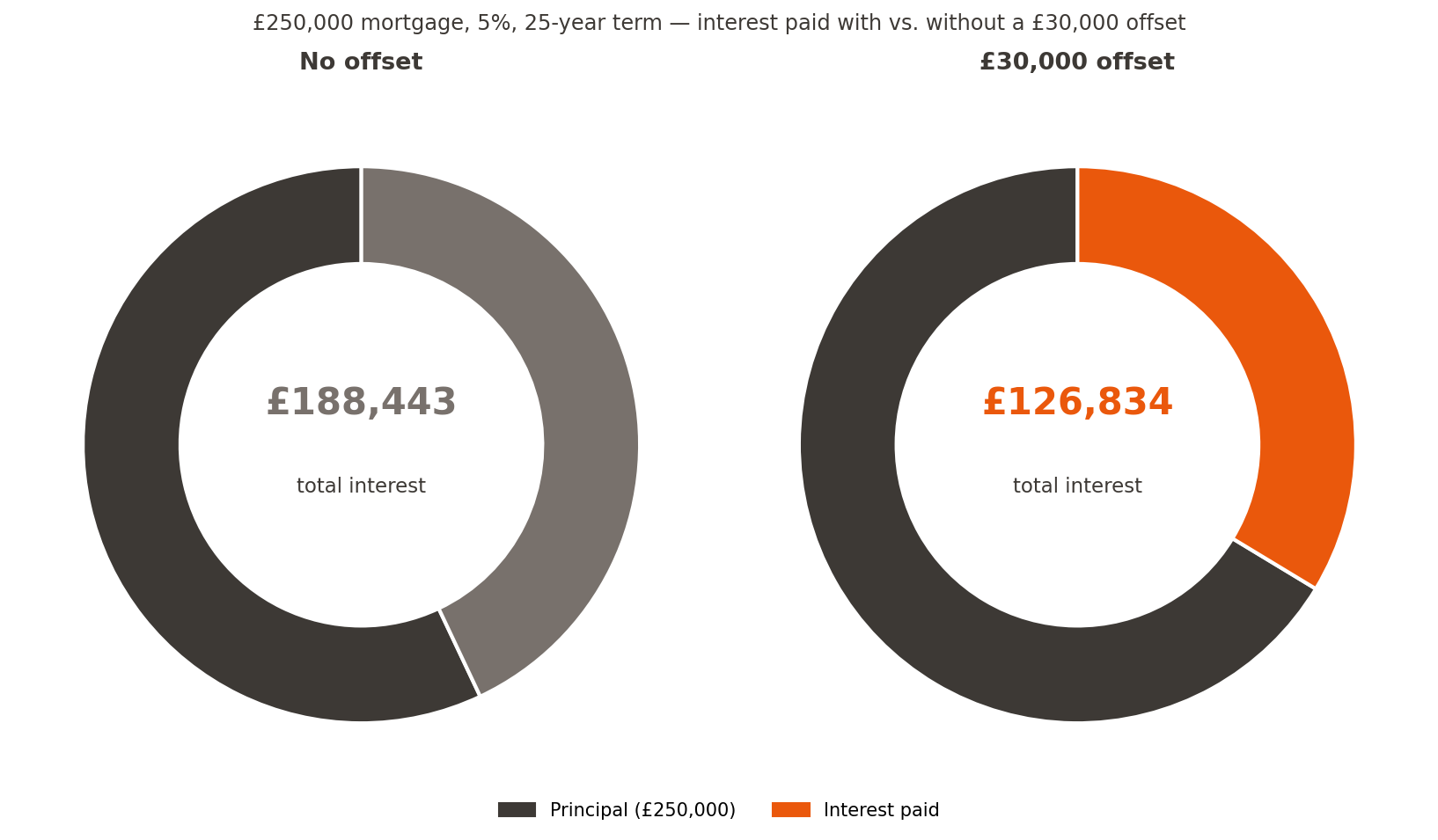
Offset Mortgages Explained: How the Interest Saving Works
An offset mortgage links your savings to your mortgage balance so you're charged less interest. The worked math on how much that's really worth.
Read more →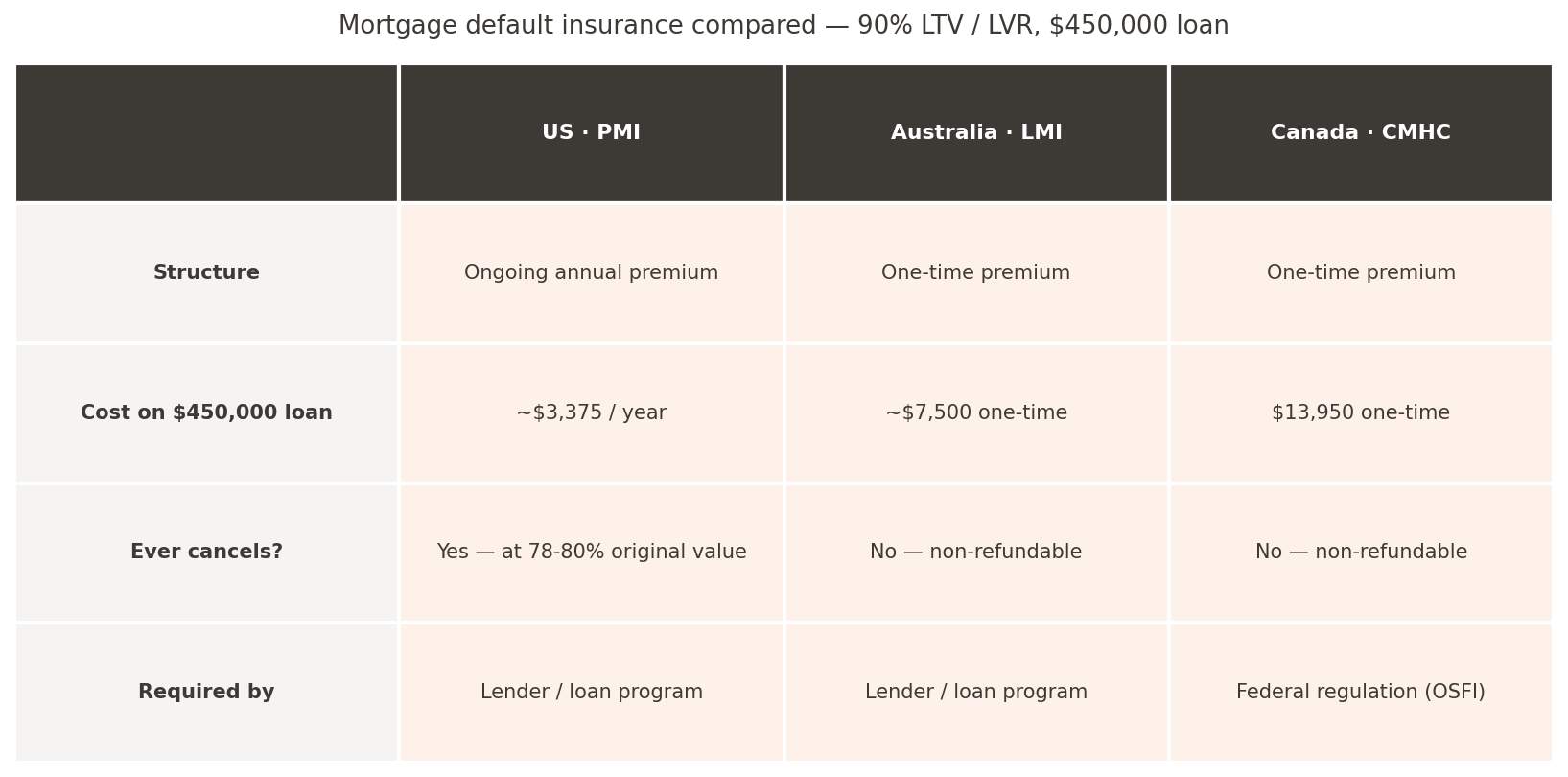
PMI, LMI, CMHC: Mortgage Default Insurance Compared
The US, Australia and Canada all charge for a small down payment, but the mechanics differ completely. What PMI, LMI and CMHC insurance actually cost.
Read more →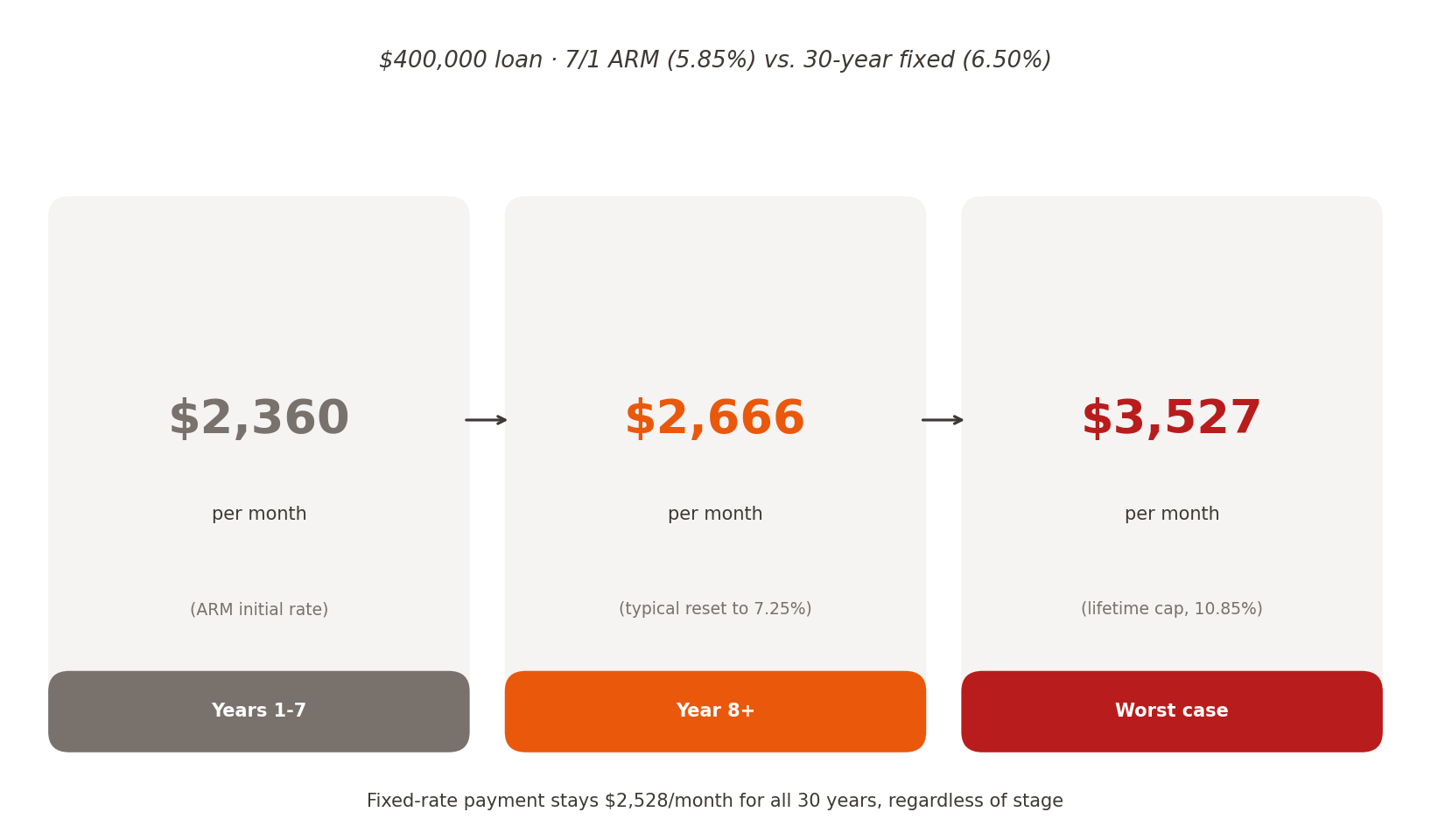
ARM vs Fixed-Rate Mortgage: What the Reset Really Costs
A 7/1 ARM can save you real money for seven years, then reset. What the savings, the reset, and the worst-case cap actually look like in dollars.
Read more →
Mortgage Closing Costs: Every Fee You Pay on Closing Day
Closing costs run 2-5% of your loan, but that number is really six or seven separate fees. Here's a line-by-line breakdown of each one on a $400,000 mortgage.
Read more →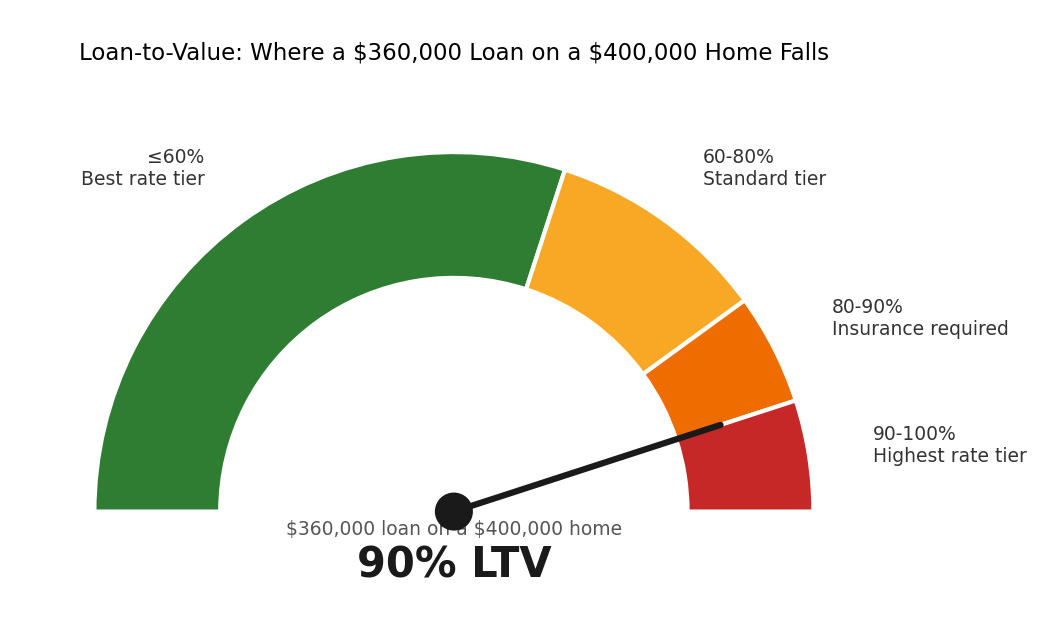
Loan-to-Value (LTV): The One Ratio That Sets Your Rate
LTV sets your mortgage rate, insurance requirement and refinancing options. How it is calculated, priced in bands, and how it shifts over time.
Read more →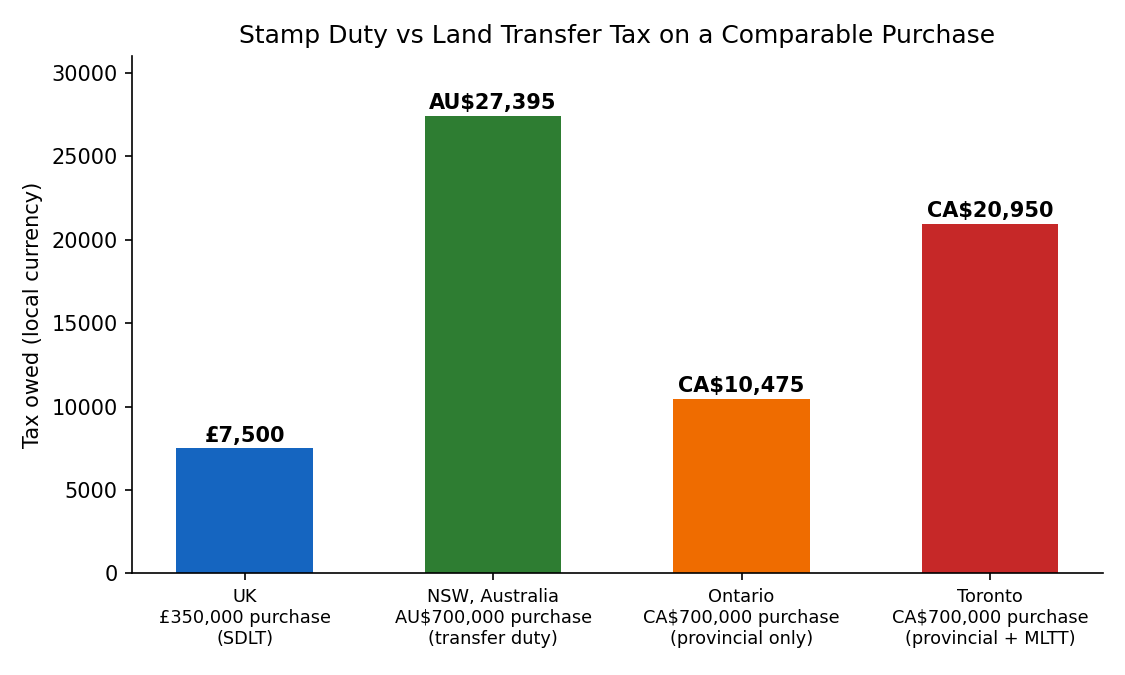
Stamp Duty vs Land Transfer Tax: What You Owe at Closing
The UK, Australia, and Canada all tax the purchase itself, but the bands, thresholds, and names differ completely, and the total bill can vary enormously.
Read more →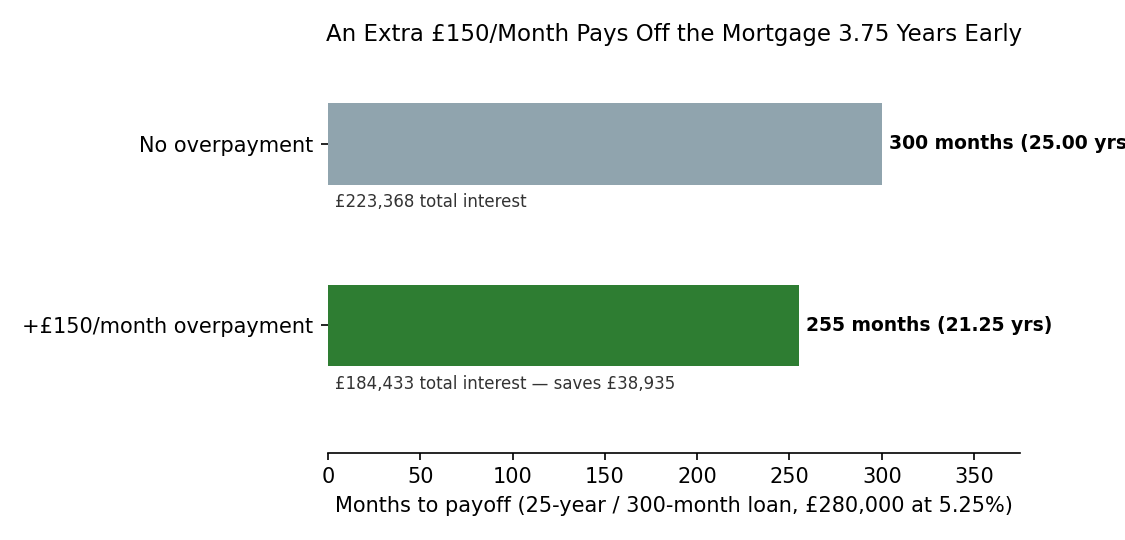
Mortgage Overpayments: What Extra Money Really Buys You
An extra £150 a month sounds small until you see it against a 25-year mortgage. The worked math, plus UK, Canada and Australia limits.
Read more →
Rental Yield vs the Lender's Stress Test on a Buy-to-Let
A good gross yield will not get a buy-to-let approved. How rental yield is calculated, and how UK, Australian and Canadian stress tests work.
Read more →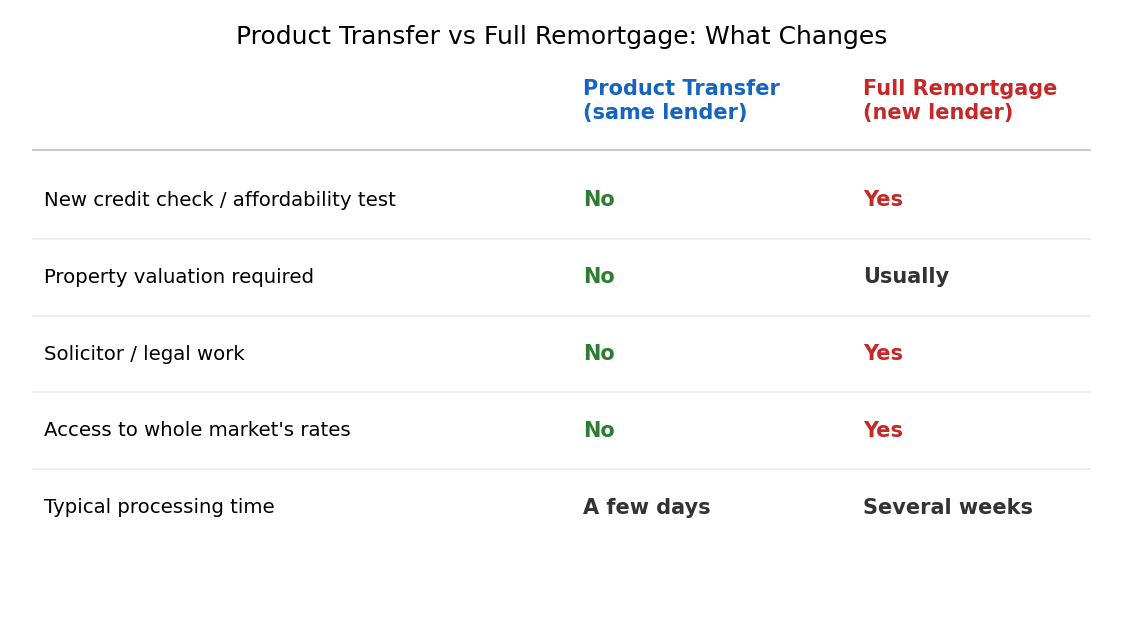
Remortgaging vs Refinancing: Same Idea, Different Words
Remortgage in the UK, refinance in the US, Canada, and Australia: the same transaction, but the same-lender product-transfer shortcut differs by market.
Read more →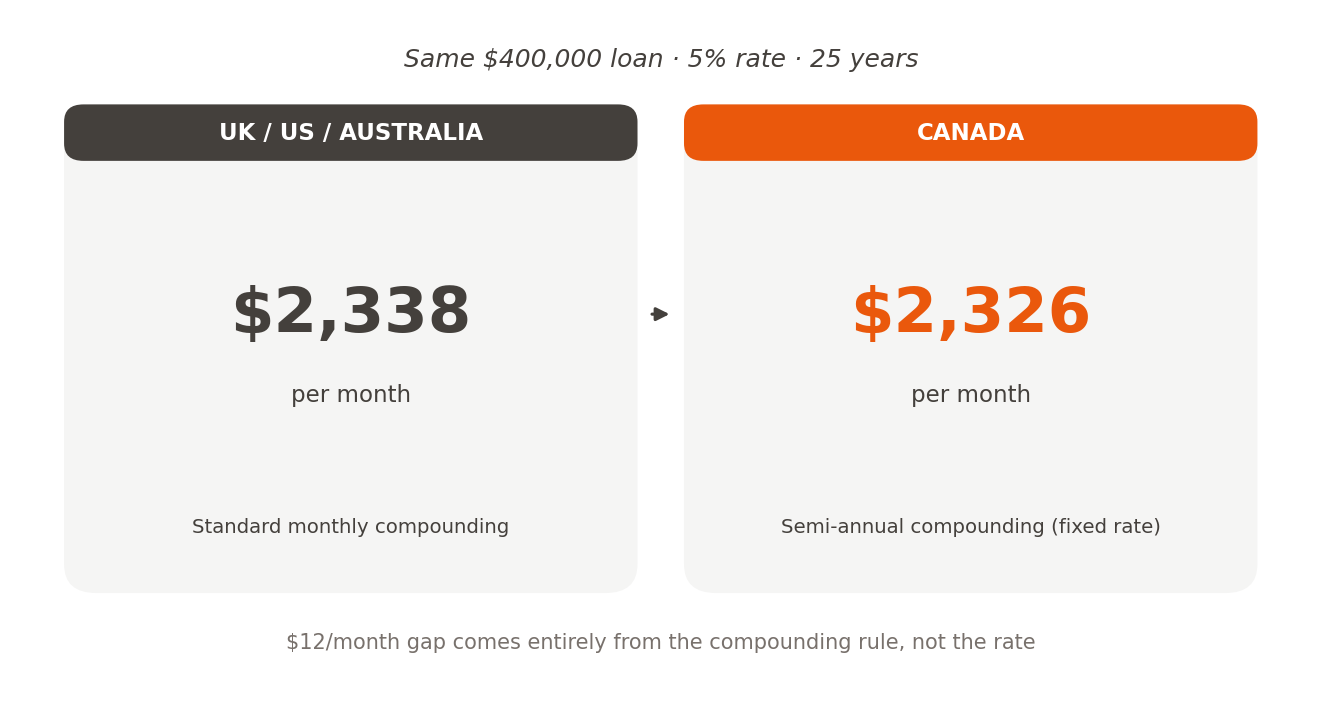
Same Rate, Different Payment: Mortgage Compounding
A 5% mortgage rate doesn't mean the same payment everywhere. See how compounding rules in the UK, US, Canada and Australia change what you pay.
Read more →
The Fixed-Rate Cliff: When Your UK Mortgage Deal Ends
Your UK fixed-rate deal ending can mean a payment jump of hundreds of pounds a month. This is why the 'cliff' happens, and how to plan around it.
Read more →
Interest-Only Mortgages: The Real Cost of Waiting to Repay
An interest-only period lowers your payment today, but not what you owe. The real math on what it costs versus paying principal from day one.
Read more →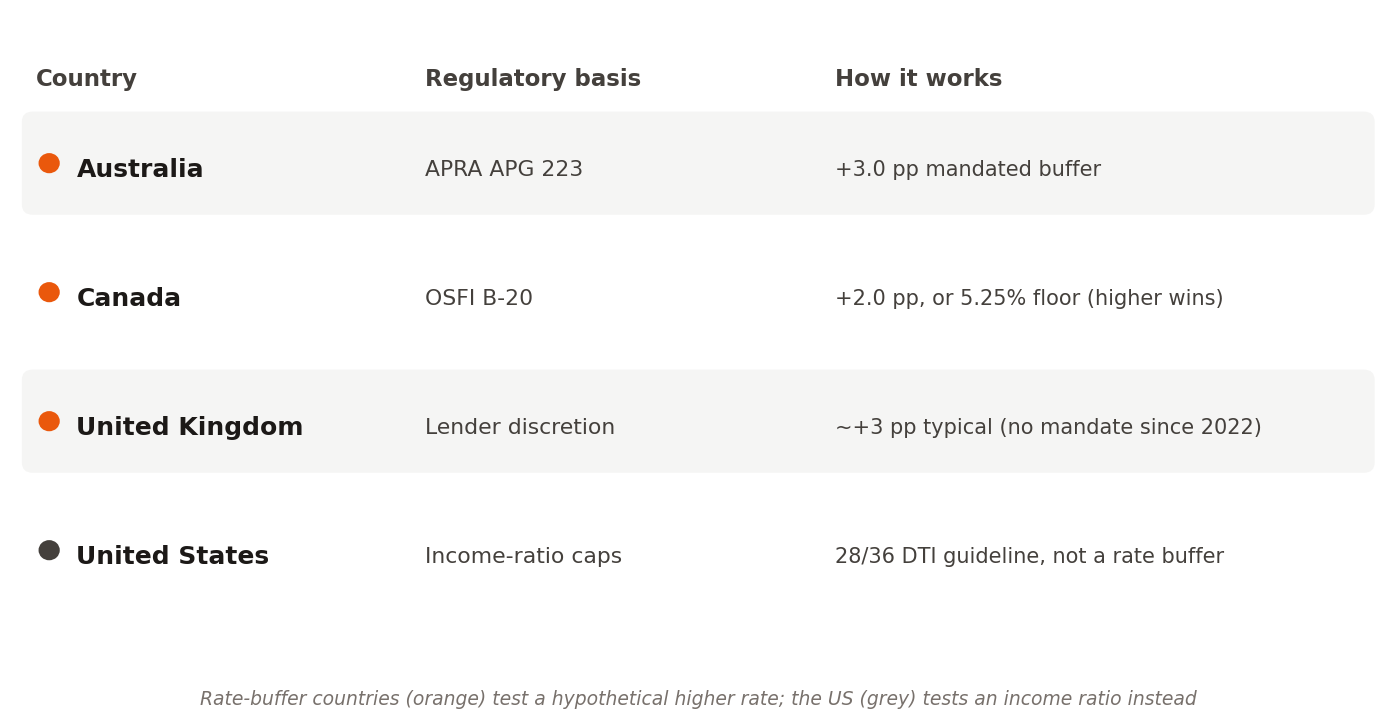
Mortgage Stress Tests Compared: UK, US, Canada, Australia
The UK, Canada and Australia test mortgages against a higher hypothetical rate. The US takes a different approach entirely — here's how each works.
Read more →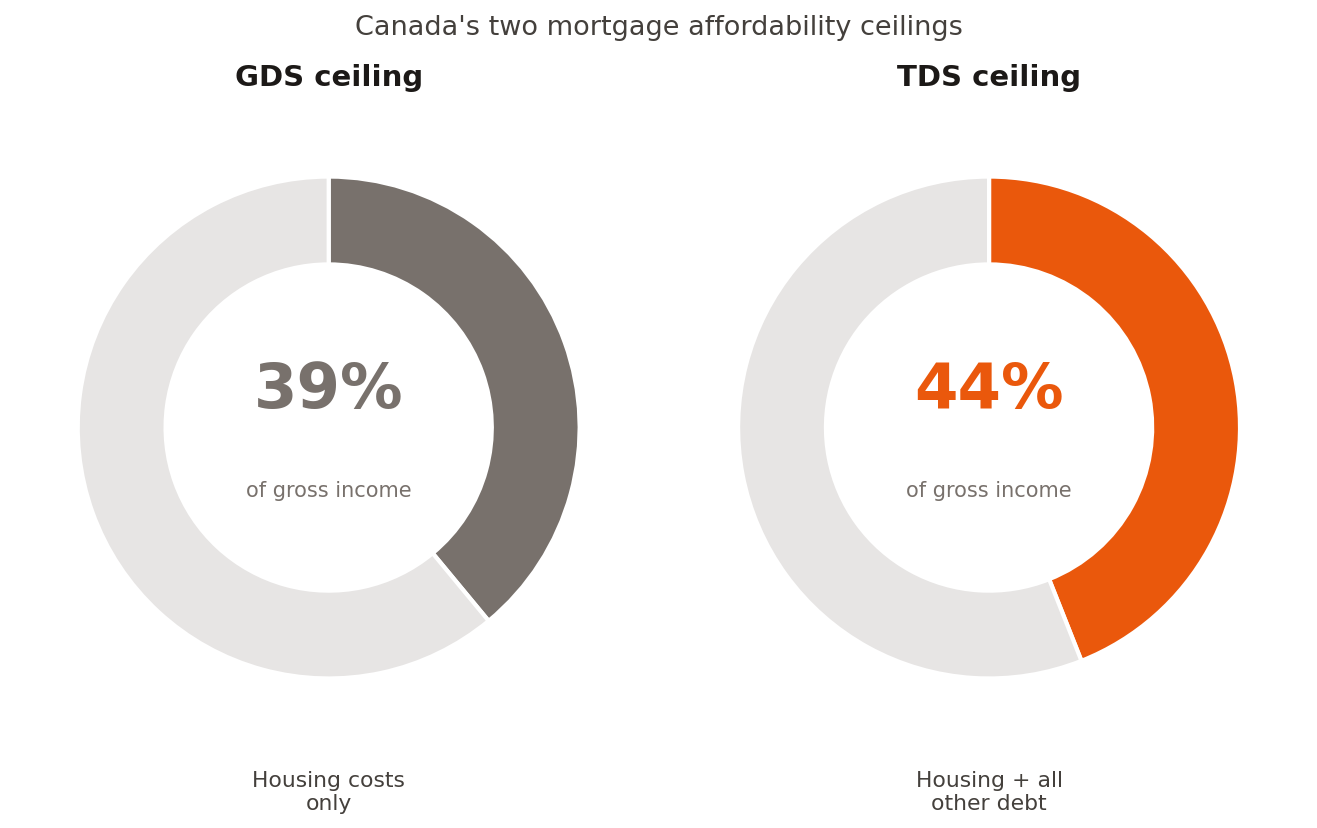
GDS and TDS Explained: What Canadian Lenders Actually Use
GDS and TDS are the two ratios that decide how much mortgage you can get in Canada. Here's what counts toward each, and the 39%/44% ceilings.
Read more →